Childcare costs
Type the hours a week, the hourly rate and the weeks a year. It takes off the funded hours for your child's age and where you live, and the 20% Tax-Free Childcare top-up.
Estimate · figures checked 23 Oct 2026 · guidance, not advice · sources
Good to know
- Funded hours are counted up to 30 a week (15 for the universal hours in England) and the hours a year above, valued at your hourly rate. Providers can charge for extras such as meals.
- In Wales, nursery education outside the Childcare Offer, and Flying Start for 2 year olds, aren't counted. In Northern Ireland, the funded pre-school place and the Childcare Subsidy Scheme aren't counted.
Questions
Who gets Tax-Free Childcare?
Usually working parents who each expect to earn at least £2,643.68 over the next 3 months (if 21 or over) and under £100,000 a year, for children up to 11 (16 if disabled). Not if you claim Universal Credit or childcare vouchers.
Who counts as working parents?
In England, you and any partner each earn at least 16 hours a week at the minimum wage, and under £100,000. The Childcare Offer for Wales has similar rules.
What is extra support?
In England, for example Universal Credit with household income of £15,400 or less after tax, or a child with an EHC plan or Disability Living Allowance. Scotland has its own list for 2 year olds.
Where the figures come from
The rates in force, checked 23 October 2026:
- England: 30 hours for working parents from 9 months, 15 hours for every 3 and 4 year old, over 38 weeks
- Tax-Free Childcare: £2 for every £8, up to £2,000 a year a child (£4,000 if disabled)
- Scotland: 1,140 hours a year for 3 to 5 year olds and some 2 year olds
- Wales: the Childcare Offer, up to 30 hours a week for 48 weeks
- Northern Ireland: help paying for childcare
Related tools
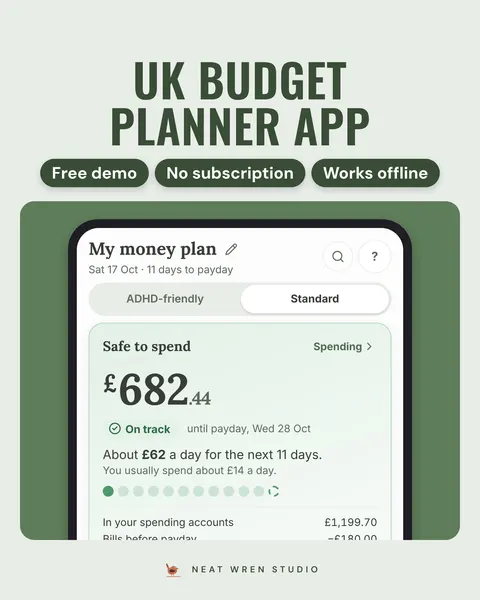
Make room for it
Calm Money: UK Budget App puts childcare in with the other bills, and shows what's safe to spend until payday.
Calm Money: UK Budget App · £12.59 on Etsy